|
|
|
The Department of Transportation has released the results of their Red Hook traffic study. The key recommendation is for a traffic light to be installed at the corner of Van Brunt and Sullivan Streets. Other recommendations include "daylighting" the Van Brunt intersections at Wolcott and Coffey Streets to improve sight lines for motorists. "No Standing" signs have already been installed on Van Brunt between Wolcott and Dikeman Streets.
P.S. 15 Principal Kathleen Leonard welcomed the changes. "Our Safety Committee meets regularly with DOT to discuss traffic issues and this light has been on our wish list for some time. We're glad it's coming," she said.
DOT's statement says that upon approval of the recommendations, DOT engineers will need to evaluate placement and timing for the signals. That process will take up to four months. New parking regulations, however, will be installed by the end of January.
The study was conducted after the death of a pedestrian and a subsequent neighborhood demonstration in July.
In a press release, DOT Commissioner Iris Weinshall said, "We will continue to monitor the traffic situation to ensure that we are doing everything we can to keep the neighborhood safe."
To discuss these changes, visit our new discussion board on the Society page.
|
|
|
|
Community Board 6 |
|
Police Precinct 76 |
|
Council Member Sara Gonzalez |
|
|
|
Assembly Member Felix Ortiz |
|
U.S. Rep. Nydia Velazquez |
|
U.S. Sen. Charles Schumer |
|
U.S. Sen Hillary Rodham Clinton |
|
Borough President Marty Markowitz |
|
Comptroller William C. Thompson Jr. |
|
Public Advocate Betsy Gotbaum |
|
Mayor Michael Bloomberg |
|
Governor George Pataki
|
|
|
Added Value, Red Hook Farmers Market |
|
Brooklyn Waterfront Artists Coalition |
|
Falconworks |
|
Hook Productions |
|
Kentler International Drawing Space |
|
PortSide NewYork |
|
Red Hook Boaters |
|
Red Hook Health Initiative |
|
Red Hook Parks |
|
Red Hook Rise |
|
Waterfront Matters |
|
The Waterfront Museum Barge
|
|
|
423 Smith |
|
A Brooklyn Life |
|
Amy Langfield's New York Notebook |
|
Atlantic Yards Report |
|
Big Cities Big Boxes |
|
Brooklyn Ramblings |
|
Brooklyn Record |
|
Brownstoner |
|
Callalillie |
|
Clinton Hill Blog |
|
Curbed |
|
Daily Heights |
|
Daily Slope |
|
danconnortown |
|
Dope on the Slope |
|
Gowanus Lounge |
|
If the Birds Knew |
|
Kinetic Carnival |
|
Only the Blog Knows Brooklyn |
|
The Real Estate |
|
Runs Brooklyn |
|
sea level :: new york |
|
Sunset Parker |
|
Until Monday: BLKN
|
|
|
|
BBC News |
|
The Christian Science Monitor |
|
Los Angeles Times |
|
NPR |
|
The New York Observer |
|
The New York Times |
|
Salon |
|
The Washington Post |
|
|
| B61 Productions is an independent news site dedicated to covering Red Hook, Brooklyn. |
|
|
|
 |
|
Brooklyn Waterfront Artists' Coalition, 499 Van Brunt St., 718-596-2507
Diesel Gallery, 242 Van Brunt St., 917-251-4070
Jalopy, 315 Columbia St., 718-395-3214
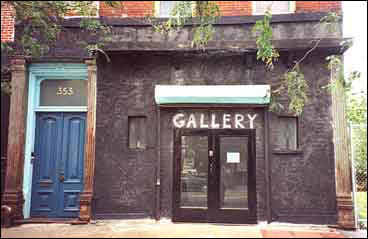
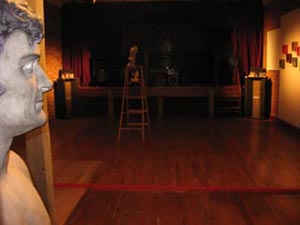
Kentler International Drawing Space (pictured), 353 Van Brunt St., 718-875-2098
|
|
|
 |
|
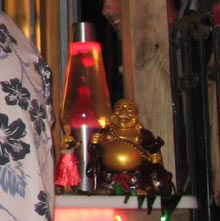
People like to talk. Especially in Red Hook where just about everybody knows one another. Like a general store, the Flea Market has been a meeting place for residents and visitors alike to strike up conversations amongst bric-a-brac.
Lately, however, it seems something more is going on at the Flea Market. Stop in some night and creative craftsman Victor Alicea will gladly show you what he's up to. |
|
|
|
 |
|
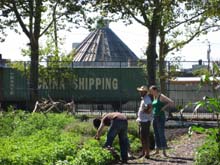
Every Saturday throughout the summerAdded Value welcomes produce shoppers to the Red Hook Farmers' Market. Hours are 9 a.m. until 3 p.m. Those interested in volunteering are encouraged to call 718-855-5531.
|
|
|
|

|
|
Sonic Youth and Yeah Yeah Yeahs played McCarren Pool in Greenpoint on Friday, Aug. 11. View the slideshow.
|
|
|
|
Brooklyn Record
Curbed
The Real Estate
|
|
|
|
|
|
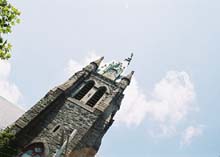
Visitation of the Blessed Virgin Mary (pictured), 98 Richards Street
Red Hook Gospel Tabernacle, 72 Van Dyke Street
New Brown Memorial Baptist Church, 609 Clinton Street
New Breed Church of the Joshua and Caleb Ministries, 66 Lorraine Street
God's Outreach Center of Deliverance, 603 Clinton Street
Calvary Baptist Church of Red Hook, 773 Hicks Street
|
|
|
| |
|
|
|
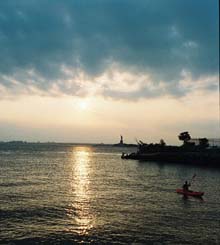
Red Hook Boaters are offering several opportunities to kayak or canoe from Valentino Pier this summer. The program is free and open to the public.
Schedule |
|
Fri. Aug. 25, 5:30-7:30 p.m. |
|
Sun. Sept. 3, 9 a.m. until 1 p.m. |
|
Wed. Sept. 13, 5:30-7:30 p.m. |
|
Sat. Sept. 16, 2-6 p.m. |
|
Fri. Sept. 22, 5:30-7:30 p.m. |
|
Sun. Oct. 1, 9 a.m. until 1 p.m. |
|
Sat. Oct. 21, 2-6 p.m.
|
|
|

|
|
|
|
|
|
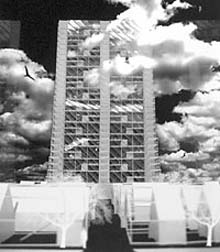
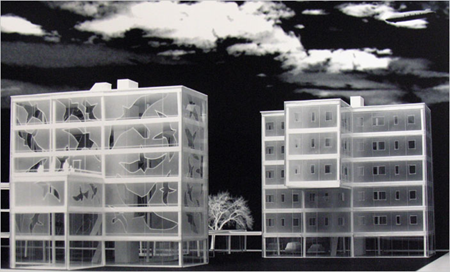
This weekend's BWAC show will feature a talk from Yale architecture students on their project "Red Hook Reinvented." The exhibit includes renderings of a futuristic neighborhood. The far-ranging plans for the mixed-use area call for everything from a nature preserve, to a 31,000 car parking lot with skyscrapers and big box stores.
Something tells us that "Future" residents would offer resistance to such plans. The Talk begins at 4 p.m. on Saturday, Aug. 12
|
|
|
|
|
|
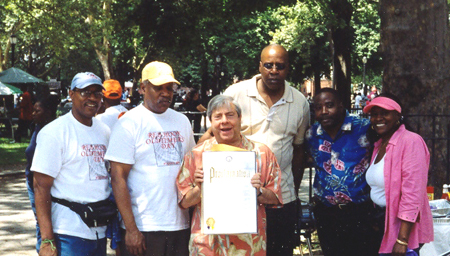
Complete with hustle contest and soul train line, the 30th Annual Red Hook Old Timers' Day will be held at Coffey Park on Sunday, Aug. 13. Festivities begin at 1:00 p.m.
The kids from Hook Productions will be documenting the event as DJ Leslie Gibbs provides the entertainment. A free shuttle bus will run to and from Valentino Pier. Sponsors include JOFAZ Transportation,
Independence Bank, NY City Parks Department, Red Hook Rise, and Turning Point Organization.
|
|
|
|

|
|
Red Hook resident David Nicolas will begin displaying "Portrait of Peru" tonight at Studio 5 (242 Wythe Ave., entrance on N. 3rd) in Williamsburg. It exhibits work from Nicolas' recent stay in Peru. The opening reception begins at 7 p.m.
|
|
|
|
|
|
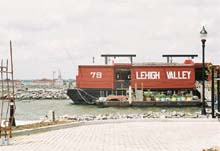
The Save the Graving Dock Committee will hold a round table discussion tonight 6-8 p.m. aboard the Waterfront Museum Barge. The event will be moderated by Carolina Salguero, director of PortSide NewYork.
The committee hopes to convince IKEA to adopt alternate parking plans for their new store that would save the working dry dock, which many in the community view as crucial maritime infrastructure. City Comptroller William Thompson has joined the movement, authoring a letter to Deputy Mayor Dan Doctoroff in support of saving the dock.
"Additionally, we hope this event can be a way to bring the neighborhood together again after the divisiveness of the last meetings of the IKEA approval process," says Salguero.
|
|
|
|
|
The Red Hook Movie Series kicks off with a screening of the Brooklyn-affirming documentary, Dave Chappelle's Block Party at the Added Value Community Farm (Columbia and Beard Streets) on Saturday, July 29 at 8:15 p.m.
The series will run every week at parks throughout Red Hook until Sept. 23. Other venues are Coffey Park and Valentino Pier.
Each feature will be preceded by a short film from Hook Productions. Red Hook Parks sponsors the event and partners with too many local non-profits to list.
|
|
|
|
|
A fatal accident earlier this month has spurred cries from local residents for mediation of traffic. Residents are planning on taking the debate to the streets Thursday, July 20. The demonstration will be held at 6:30 p.m. at the corner of Van Brunt and Wolcott Streets--the intersection where Janett Ramos of Sunset Park was struck and killed by a vehicle on July 6 as she crossed the street. P.S. 15 is also located at this corner.
Organizers include Red Hook Civic Association, Red Hook Lions, Groups Against Garbage Sites and Beard St. Associates. The groups have been lobbying for traffic signs at the corner to deal with the increased traffic from the new Fairway and cruise ship terminal. A release from the groups states that Van Brunt St. has the largest stretch of unprotected intersections in the city (15 in 3/4 mile). The accident was a realization of their worst fears.
"The New York City Department of Transportation continues to refuse to install traffic lights or 4-way stop signs or even paint the cross walks across Van Brunt."
For a neighborhood that has been divided over the impact of recent developments, the traffic issue has the potential to galvanize neighborhood organizations the way garbage transfer sites did six years ago.
"We must work with our neighbors to protect our children and our community" the release says. "There is strength in numbers."
|
|
|
|
|
|
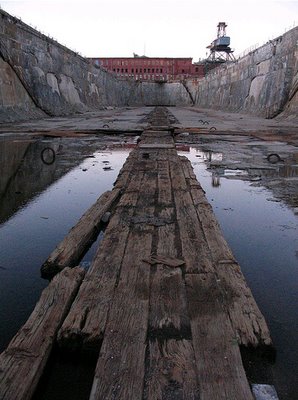
A documentary photographer named Gowanus has posted a stream of photos of the Todd Shipyard. This shot is taken from inside the graving dock at the future Ikea site. Ikea has ignored alternative plans that would retain this working shipyard rather than converting it into a 1,500-car parking lot. Photo was first noted at Gowanus Lounge.
|
|
|
With storm season approaching, Community Board 6 has called an unscheduled committee meeting to explore issues related to land use and development in a floodplain. Representatives from various agencies, including FEMA, will discuss emergency preparedness. The meeting will begin at 6:30 p.m. on Thursday, June 22, at Long Island College Hospital. |
|
 |
|
|
|
|
|
|
|
| Open Studio 2006, a self-guided tour of Red Hook and Carroll Gardens artists' studios, will be held this weekend in conjunction with the BWAC Pier Show (Brooklyn Waterfront Artists Coalition) at 499 Van Brunt St. Among the many local stops on the tour will be Kentler International Drawing Space at 353 Van Brunt, and the Diesel Gallery, 242 Van Brunt. The tour will run 12-6 p.m. on Saturday June 3 and Sunday June 4. Maps can be found at www.bwac.org. |
|
|
|
|
|
| Local youth organization Added Value will be featured on New York 1 tomorrow Tuesday, May 23. The segment will air between 7 and 9 a.m. If you are not a cable subscriber you can check it out here. |
|
|
 |
|
|
|
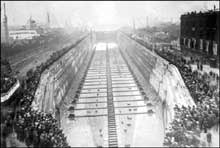
The photo essay "Big Box on the Basin" can still be seen at The Urban Center, 457 Madison Ave. (51st St.) through this Friday, May 26. The exhibit chronicles the history of the Todd Shipyard graving dock, and addresses the feasibility of maintaining the dock as a viable ship repair facility even as it is slated to become IKEA's parking lot.
The exhibit was curated by Mary Habstritt, Pres Roebling Chapter of Society for Industrial Archeology, and Carolina Salguero, Director PortSide NewYork. The "Save the Graving Dock Committee" consists of the Partnership for Sustainable Ports; Municipal Art Society; Metropolitan Waterfront Alliance; Roebling Chapter, Society of Industrial Archeology; Waterfront Museum; PortSide; Preservation League of New York State and Stevens Technical Services.
|
|
 |
|
|
|
The Kentler International Drawing Space is presenting the drawings of Ernst Benkert through Feb. 11. A catalogue with essays by invited artists and critic Sarah Schmerler accompanies the exhibition of 45 drawings and artistic contributions from the current Brooklyn resident.
The Kentler partners with Proteus Gowanus for this exhibition, which will present Benkert's many Travel and Artist's Books. The gallery, located at 353 Van Brunt St., is free and open to the public Thursday through Saturday, 12 - 5 p.m.
|
|
 |
|
|
|
Paid positions are available with the Red Hook Community Justice Center's TEACH program. The peer educators will learn about HIV/AIDS and drugs in order to educate other teens. The educators will meet twice a week at RHCJC, 88 Visitation Place.
Those interested are asked to complete this application and return it to Sonia Gonzalez at RHCJC, or fax it to 718-923-8248. For more information call 718-923-8274.
|
|
|
|
See Transfers to read the latest contribution from neighborhood teens. Nynita Johnson, a peer educator with TEACH, offers her poem To Smile or Not to Smile.
|
|
 |
|
|
|
Neighborhood teens, their families and the community are all invited to "Welcome to Red Hook," next Wednesday, Dec. 28, at the Sol Goldman (Red Hook) Recreation Center, 2-7 p.m. Food and refreshments will be served at the multi-media event sponsored by the Rec. Center and Hook Productions.
Scheduled entertainment includes the sounds of the Hook Productions team, Red Hook's own DJ Cashmere, free VJ Video Mixing Workshop, video footage of recent Red Hook events, and dance performances by Final Destination and the Red Hook Recreation Center's Hip Hop Dance Team.
For more information contact Oja Vincent at 718-722-3219 or email ovincent(at)cityparksfoundation.org.
|
|
|
|
|
|
In coordination with the Red Hook Health Initiative, B61 Productions is proud to begin publishing work from neighborhood teens. First in our series is To Get Up Out Dis Hood, a poem by Emmanuella Murat.
|
|
 |
|
|
|
While construction continues on the long-awaited new store at 480 Van Brunt St., Fairway has announced immediate openings for assistant department managers at the future store. After 12-16 weeks of on-the-job training at one of the company's Manhattan locations, successful candidates will be transferred to the Red Hook store. An opening date has not been made public.
Positions are available in the cheese, delicatessen, grocery, meat, health food, coffee and security departments. Candidates must reside in the five boroughs, possess good verbal communication skills and have experience in the retail grocery business with some managerial responsibilities. Fairway will begin hiring and job training programs later this winter for the remaining positions.
Resumes should be faxed to 212-939-0505 or emailed to rmcmonigle(at)fairwaymarket.com.
|
|
 |
|
|
|
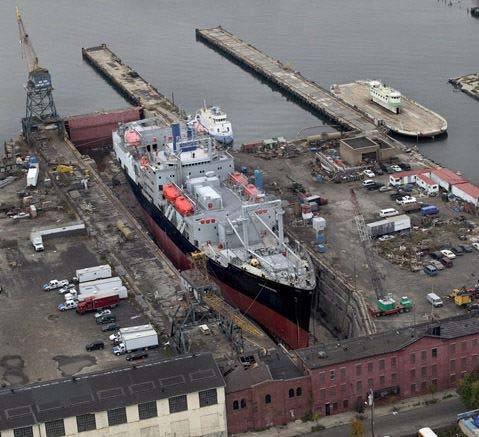
Kentler International Drawing Space will host a "Save the Waterfront" discussion Tuesday, Nov. 15 at 7 p.m. The free event will feature two broadcast films and discussion on the historical and industrial importance of the Todd Shipyard graving dock which is slated to become Ikea's parking lot.
The "Save the Graving Dock Committee" consists of the Partnership for Sustainable Ports; Municipal Art Society; Metropolitan Waterfront Alliance; Roebling Chapter, Society of Industrial Archeology; Waterfront Museum; PortSide; Preservation League of New York State and Stevens Technical Services. Kentler is located at 353 Van Brunt Street. (Photo by John Bartelstone. Click here for more.)
|
|
 |
|
|
|
Two years have passed since Dolce (pictured) and his 13 siblings were found in the Revere Sugar Refinery. Few could have predicted the fate of the ragtag litter. A mix of pit bull, German shepherd and whatever else was strong enough to survive on the banks of the Erie Basin, they are the last of a breed that is pure Red Hook.
|
|
|
|
|
|
The New York Post has reported that 21-year-old Benjamin Collazo was fatally shot inside his apartment building at 467 Columbia St. on Saturday, Oct. 15.
The shooting occurred at 8:48 p.m. Collazo suffered bullet wounds to his arm, neck and back. He was pronounced dead at Long Island Community Hospital about an hour later. According to the paper, police do not have any suspects in the apparent robbery. It is the third murder reported this year in the 76th Precinct.
|
|
 |
|
|
|
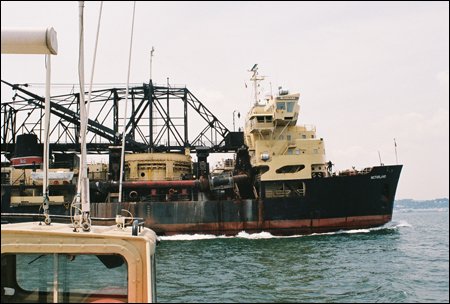
Amid the bustle of New York Harbor, the United States Army Corps of Engineers is quietly going about their business of maintaining the waterways for whatever developers and the City decide to throw at Brooklyn's waterfront--cruise ships, cargo, breweries, whatever. Find the full story in Society and view the slide show here. (All photos by B61)
|
|
|
|
|
|
The second-graders filed one-by-one into the gymnasium. It was there, on that May 5, they were introduced to what would come to symbolize Mexico's independence--a brightly-colored donkey hung from a tether ball pole. See Shorts.
|
|
|
|
For reasons unknown, you will experience difficulties viewing this site on the Safari web browser. We hope to have these issues worked out soon. Thanks for your patience. |
|
|
Logo design, Tammy Busshardt and Endeavor Marketing Group; web design, Barry Kalpinski; programming, Red Arrow Software. |
|
|
| |
|
|
Demolition set to begin at refinery |
|
|
|
(B61 Photo)
|
|
Originally posted Dec. 8, 2006
|
|
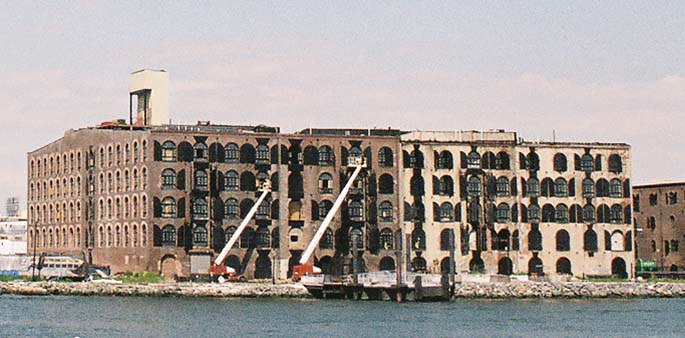
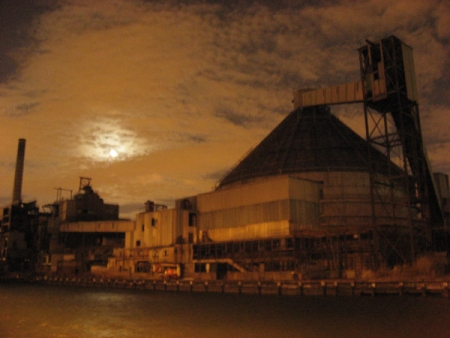
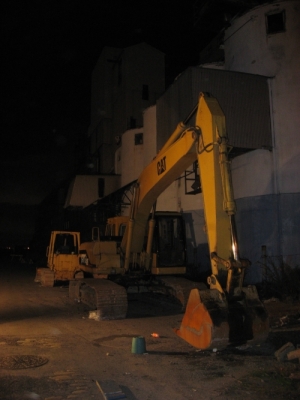
The New York Times once referred to it as the "Empire State Building" of Red Hook's "skyline." On Wednesday Thor Equities received a permit to begin the demolition of the Revere Sugar Refinery. Thor's plans have not been made public, but will include a mix of residential and retail space.
Few argue that the property should remain in its current state of disrepair. But many had hoped that at least the iconic cone-shaped sugar-processing vat would survive as a remnant of the neighborhood's past. Other potential foes are industry advocates who fear that tenants of any future high-priced condominium would threaten the existing businesses operating in the area.
 However, Thor may find allies among organizations lobbying for new housing developments. The Red Hook Civic and Business Associations contend that the neighborhood's economy would benefit from more residents demanding more goods and services.
Regardless of the plan's particulars, the $40.5 million post-industrial property will require drastic rezoning and remediation across the 10 acres of upland property and 5.6 acres of seaward area. Once design plans are formalized, the proposal will undergo a lengthy Uniform Land Use Review Process (ULURP).
Read much more at Gowanus Lounge and Curbed.
|
|
Red Hook, Brooklyn circa November 2006 |
|
|
|
(B61 Photo)
|
|
Posted Nov. 1, 2006
|
|
It's hard to take a bad photo in Red Hook. View this photo essay on the neighborhood as it stands today.
|
| Continuing coverage |
|
Housing a contentious point for City's pier plan |
|
|
|
(B61 Photos)
|
|
Originally posted Oct. 18, 2006
|
|
Change is the only constant in the formula for redeveloping South Brooklyn's waterfront. In 2014, the 1.1-mile stretch from Atlantic Ave. to Wolcott St. may look nothing like today's gritty corridor dotted with trendy restaurants and shops. The parties hoping to influence that change packed a Long Island College Hospital conference room last Thursday night for a public hearing held by the New York City Economic Development Corporation.
A plan for 350 housing units along the west side of Columbia St. (between Degraw and Warren Streets) is the most contentious of EDC's proposals.
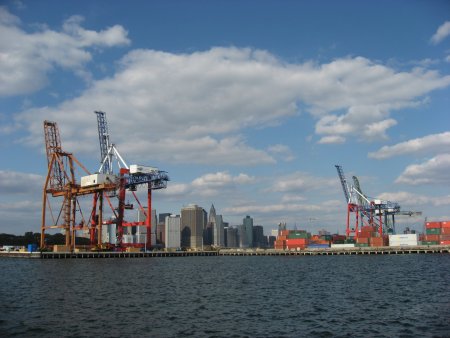
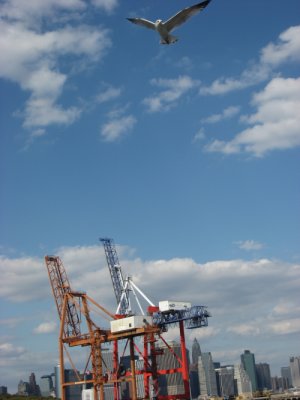
American Stevedoring Inc., the operator of the container port currently on piers seven through 10, led opposition to the housing proposal. ASI's stance is not new. Nearly every change since the 1976 lease agreement between the City and the Port Authority has resulted in less space for Brooklyn's last remaining container port. And the current plan would reduce ASI's footprint to just pier 9a.
The City argues that ASI requires taxpayer subsidies to remain in business, and that the South Brooklyn Marine Terminal (SBMT) in Sunset Park is more suitable to container shipping because of its rail access. ASI's lease runs out in March of 2007.
U.S. Congressman Jerrold Nadler voiced opposition to the plan and support for ASI.
"If the City is successful in shutting the Red Hook operation, and neglects concrete planning for a container port at SBMT, we will lose all of our existing container business and the 500 high-paying jobs currently at Red Hook," Congressman Nadler said. "This business will leave, and it will be nearly impossible to get back."
EDC's Draft Environmental Impact Statement disputes ASI's job figures. The document estimates that there are currently 330 employees on the site.
Transferring cargo on the rail lines adjacent to SBMT would likely meet heavy opposition from Brooklyn neighborhoods that the trains would pass through. An effort is underway to create an underwater rail line that would connect Sunset Park to New Jersey.
"It's a disturbing departure from a consensus we've had for many years," said ASI spokesman Matt Yates. He characterized EDC's approach as a "quick and dirty process" conducted behind "closed doors by a developmental juggernaut. And I think we should all say 'no' to it."
ASI has found political bedfellows in open space advocates, as well as residents who enjoy unobstructed views of lower Manhattan--the financial district skyline would be hidden behind seven-story condos.
The Brooklyn Greenway Initiative is foremost among the open space advocates. Since 1998, BGI has lobbied to create a bike and pedestrian trail along 14 miles of Brooklyn's western waterfront, similar to Manhattan's west side bike path. Inch by inch, BGI has secured cooperation with entities involved with Brooklyn's redevelopment. Along the way, the nonprofit accumulated $14.6 million in federal funds secured by U.S. Congresswoman Nydia Velazquez.
"This fluid stretch would become mincemeat with the rezoning proposal," said Milton Puryear, Vice Chairman and Director of Planning for the Initiative. BGI insists the path must be at least 30 feet wide. EDC's plan reduces that to 25 feet. Puryear says the issue is more than simply five feet.
"We at Brooklyn Greenway Initiative have studiously avoided taking positions on land use issues," Puryear said. "But this is a case where a land use proposal...directly threatens a long-standing and widely vetted plan for the Brooklyn Waterfront Greenway."
The housing development would cause right of way conflicts, while depriving "that 'Ahhh' moment for the thousands of people whose daily routine takes them up and down Columbia St.," Puryear wrote this week.
South of Hamilton Ave. the cries were for something else entirely, as residents welcomed a discussion that included housing.
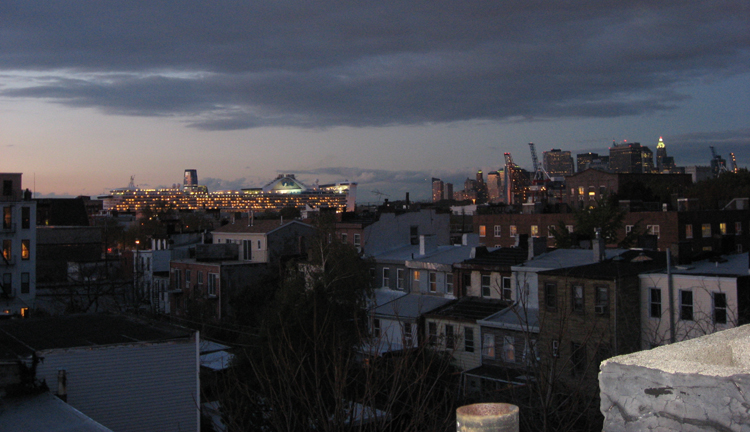
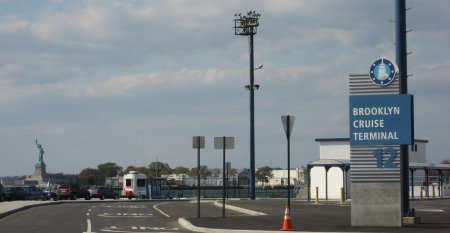
Community Board 6 member Lou Sones proposed that EDC consider affordable housing units upland from piers 10 through 12, behind the city's cruise ship vision on Imlay St. His plan would require residential rezoning of empty lots just to the North and South of the Imlay St. warehouses.
"You don't want housing on Columbia St. Fine. We need more housing down in Red Hook," Sones said. The plan doesn't conflict with any of the other proposals, he insisted,
"And people in the back would actually have a chance to own something in Red Hook."
"I don't like the Housing on Columbia. But I'm pleased that people are paying attention to Red Hook," said Florence Neal of the Kentler Gallery. "Failed plans for the container port really tore up this neighborhood. Eminent domain and zoning changes chased a lot of people away."
John McGettrick of the Red Hook Civic Association echoed that sentiment. "A lot of vacant land was lost due to development of a container port that never fully materialized."
Many homeowners sold property when the City seemed dead set on turning the neighborhood into a garbage transfer site in the early 1990s. The redevelopment of Red Hook's piers gives housing advocates an opportunity to reclaim some territory.
The Imlay St. plan would include mixed-income housing with preference given to senior citizens, artists and other Red Hook residents.
Neal said Sone's plan was "a chance to keep the neighborhood together. We want to keep our neighbors our neighbors."
EDC estimates that its housing proposal would add 770 new residents. Housing advocates contend that an influx of residents would spur Red Hook's economy by drawing "mom and pop" businesses. EDC claims that a mix including retail, hotel and convention space, cruise terminals, art galleries and light industry would produce nearly 4,000 jobs.
Joe Bernardo, co-owner of Hope and Anchor diner, said he was optimistic about the process.
"As the EDC integrates the cruise ship industry, there's plenty of opportunity to add a component of housing." said Bernardo, who has helped form the Red Hook Business Association. "It feels like we're being listened to, but they have to please a lot of people."
|
|
|
|
EDC plans to fix "series of historical accidents"
|
|
Lines being drawn on EDC plan for piers |
|
Maritime history aboard the Mary A. Whalen |
|
|
|
(B61 Photo)
|
|
Originally posted Oct. 9, 2006
|
|
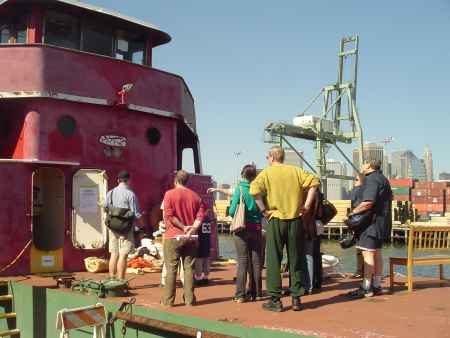
From 1938 to 1993, the Mary A. Whalen and her crew of seven moved fuel up and down the Northeastern seaboard. Today the 172-foot ship rests at Red Hook's container port where PortSide NewYork hopes the vessel will facilitate a stronger bond between the neighborhood's history and its future.
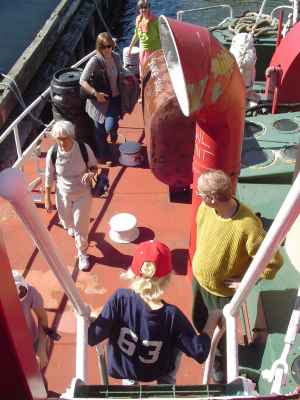
The ship will be refurbished as PortSide repurposes it for public access. Museum, shops, and event space are all part of a plan that also includes securing a more central location in Red Hook.
The tour was part of Open House New York, which provided a preview of Red Hook's nascent tourism industry. Other attractions included the Last Exit to Brooklyn walking tour hosted by Daniel Wiley, a tour of the Sixpoint Craft Ales brewery, Red Hook Boaters kayak tours and a visit to the Waterfront Museum and Showboat Barge.
|
| UPDATE: A second tipster reports that the graving dock has not been filled, but that people at the site say, "it's only a matter of time." |
|
Graving dock filled? |
|
|
|
(B61 Photo)
|
|
|
|
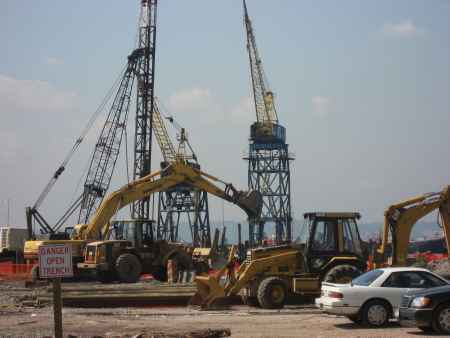
A tipster reports that IKEA has begun filling in the Todd Shipyard graving dock. Despite pleas from a group collectively known as the "Save the Graving Dock Committee," IKEA has remained steadfast in their intent to pave over the maritime structure. Featured in Scientific American when it was built in 1866, the graving dock remained functional until IKEA purchased the property in June, 2005.
As one of the Preservation League of New York State's "Seven to Save," the dock garnered interest from preservationists and local maritime advocates before and after the City Council approved the project.
All buildings on the 22-acre site have now been demolished, including five Civil War-era buildings that were eligible for the National Register of Historic Places. Yet the fate of the hidden graving dock has been the subject of speculation. It was rumored that IKEA was awaiting written authorization from the Army Corps of Engineers before converting the 710-foot dock into a 1400-car parking lot.
Anyone able to confirm or deny this report is encouraged to send an email to geton [at] b61productions [dot] com.
|
|
Multi-media exhibit opens Friday at Kentler |
|

|
|
Originally posted Sept. 7, 2006
|
|
|
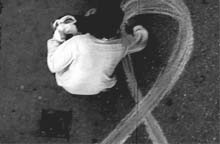
| Kentler International Drawing Space, the vanguard of Red Hook's art scene, is set to open "Limen 2," a multi-media installation, drawing and performance by Monika Weiss. The performance piece begins at 7 p.m. Friday. A subtle act of Weiss tracing her own body on layers of newsprint will be projected throughout the gallery's front and back rooms via a video camera dangling overhead. A reception will follow 8-9 p.m.
The video exhibit runs until Oct. 28 with an Artist Talk on Saturday, Oct. 14, 4 p.m. All Kentler exhibitions and events are free and open to the public. The gallery is located at 353 Van Brunt St. and is open Thursdays through Saturdays, 12 - 5 p.m.
|
|
Coasts collide at new art space |
|
|
|
|
|
(B61 Photo) |
|
|
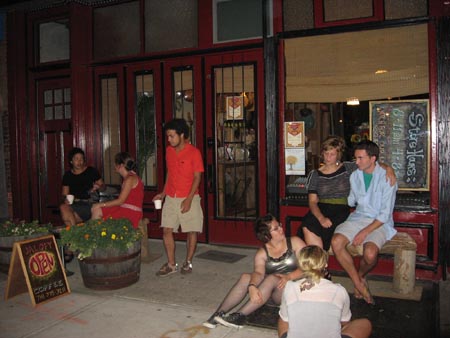
"We're taking all of our interests and jamming them into one room," says Geoff Wiley one of the owners of Jalopy, a new guitar shop/concert venue/art gallery/coffee house at 315 Columbia St.
Geoff, along with his wife Lynette and friend James Drury, recently opened the doors next to the honkey tonk bar Moonshine on the block north of Hamilton Ave.
Hailing from the West coast by way of the Chicago advertising industry, Geoff says Red Hook reminded him of the Ballard neighborhood in Seattle. "It's this old dockside community with the same feeling. An artists enclave in an old fishing neighborhood."
The Wikipedia entry for Ballard reveals striking similarities between two peninsular neighbhorhoods on opposing sides of the continent.
 "Ballard emerged as one of the most interesting neighborhoods in Seattle. Its live music scene expanded...the Second Saturday artwalk became a popular and established tradition (although off the radar of local critics and curators); and the restaurant, boutique, and cafe scene exploded." "Ballard emerged as one of the most interesting neighborhoods in Seattle. Its live music scene expanded...the Second Saturday artwalk became a popular and established tradition (although off the radar of local critics and curators); and the restaurant, boutique, and cafe scene exploded."
"The retail and artistic activity has been accompanied by a real-estate boom...The influx of new residents will undoubtedly create further traffic congestion in the community; the relative lack of mass transit linking Ballard to other Seattle neighborhoods, and scarcity of parking...are issues that have not been resolved. Transit and growth remain the two most contentious issues regionwide, with little strong leadership from local politicians."
While Columbia St. undergoes a massive reconstruction out front, Jalopy is developing five or six businesses inside.
Adult music education classes will begin this fall with lessons in guitar, bass and banjo. The shop also rebuilds and restores instruments.
The stage will feature musical acts in the jazz, roots and bluegrass genres. This Friday features the Mad Jazz Hatters. On Saturday the Bogs Visionary Orchestra will play. The shows begin around 8 p.m., are all-ages and free (pass the hat).
Geoff envisions the venue becoming an intersection for art and politics.
"My goal in the next five years is to get Noam Chomsky to speak and Tom Waits to play," he says. "It's really meant to be a bully pulpit. That's why we didn't go non-profit, so we can say what we want."
Welcome to the neighborhood.
|
|
New Jersey odor prompts alarm in Red Hook |
|
|
|
|
|
(B61 Photo) |
|
Aug 21, 2006 |
|
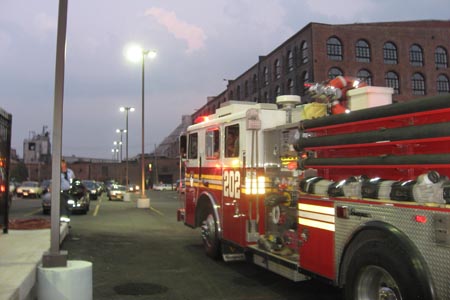
Red Hook's Firehouse Engine 202 responded to reports of a gas leak at 7:30 Sunday night. Last month the company responded with units throughout the city to the gas explosion that destroyed an Upper East Side townhouse. Sunday's smell, however, turned out to be mostly innocuous--albeit somewhat noxious.
Residents on the 400 blocks of Van Brunt St. stood outside their homes as four fire trucks and a police unit probed the scene. The investigation moved to Conover Street where the teams checked out Sunny's Bar and Fairway's cogeneration plant.
The source? According to Fairway junior partner David Sneddon, the smell likely wafted over the harbor from Bayonne, NJ where gas tankers load and unload cargo at waterfront facilities.
This is the second time in five days that noxious fumes have floated across the water from New Jersey. Last Tuesday, at least 21 residents in Queens and Staten Island were sickened by potent gasoline fumes, according to the New York Post. In that case, boaters first reported the smell around the Kill Van Kull site west of the Bayonne Bridge.
|
|
Analysis |
|
"Reinventing" Red Hook beyond recognition |
|
|
|
Yale Architecture students presented a wide range of visions for Red Hook's future at the BWAC show last Saturday, Aug. 16. This project proposed converting the Red Hook Houses into urban "bungalows." (Rendering from Yale School of Architecture)
|
|
Originally posted Aug. 17, 2006
|
Best intentions brought bright Yale architecture students to BWAC's waterfront gallery. Beautiful renderings were circulated throughout the city on the wings of The New York Times Arts section. It must have seemed like a good idea at the time.
Unfortunately, the plans for the future of Red Hook share little with the neighborhood's current reality, reflect none of the area's historical significance and barely mention solutions to real problems. A handful of residents showed up for last Saturday's Artists Talk, and made their feelings known. Polite gallery-goers gasped -- their neighborhoods surely far-removed from the pitched battles of gentrification.
Professor Edward Mitchell presented an overview of the 14-week course before allowing a brief Q and A session, wherein he rightly took the heat from informed and insulted residents. One plan would replace Red Hook Park with a 31,000 car parking ramp. Another would level all industry in the Erie Basin so that Manhattan residents wouldn't have to go all the way to Fire Island. Yet another proposal restored the neighborhood to its natural state underwater to accommodate a fish farm.
"I don't defend that one," Mitchell said as he was peppered with questions. "Some of these projects revel in the spectacle of architecture."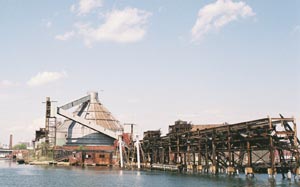
CB 6 members Celia Cacase and Carolina Salguero voiced displeasure at theoretical student projects being presented as potential blueprints for the area.
"This is irrelevant," said Salguero, director of PortSide NewYork and Yale alum. "There's nothing wrong with exploring abstract architecture. But don't come here and call it planning."
Another resident noted that outsiders rely on cars to access the neighborhood. He suggested that the professor walk around the neighborhood to get a feel for Red Hook's real charm.
In fairness, one project that did not receive media attention focused on redirecting traffic patterns. However, this plan also operated outside reality as it looked to mediate traffic by placing Ikea off Hamilton Ave. rather than on the waterfront. In reality, artist renderings are more persuasive than traffic charts, the "spectacle of architecture" isn't solely the domain of 24-year-olds and the furniture giant will have its store on the harbor.
Fear of a semester's worth of blood and sweat may seem irrational, but Yale is not just a place of higher learning. It is a corporation with an endowment of $15 billion. To put this in perspective, Yale could purchase both the Ikea site ($31.25 million) and the Revere Sugar Refinery ($40.6 million). Then they could pay $1 million to every man, woman and child in Red Hook. They would still have...well, $15 billion. It may not be Harvard-type money, but still.
From the dark days of the crack epidemic, to current economic redevelopment programs, there is symmetry between New Haven and Red Hook. While Yale has walled itself off from much of the poverty and crime that the city has experienced, it has at least made some efforts to strengthen the local neighborhoods. For instance, as of 2002, Yale's Office of New Haven & State Affairs had helped 500 of its employees purchase affordable homes.
Yet the extravagant plans for Red Hook only reflect visions of Ivy League students who are walled-off from the real world.
|
|
The weekend that was...as it once was |
|
|
|
(B61 Photo) |
|
Originally posted Aug. 15, 2006
|
|
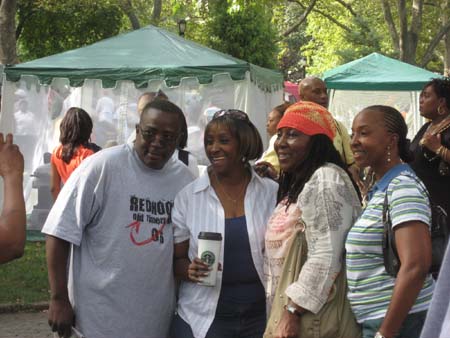
It's a popular hobby these days to imagine what Red Hook could be. But people who remember how it use to be, got together in Coffey Park on Sunday. The Annual Red Hook Old Timers Day drew about 2,000 for what is best described as a massive family reunion.
In every corner of the eight-acre park, a constant procession of old friends greeted one another with hugs, snapshots and stories. Topics ranged from the Calvary Baptist youth ensemble to legs broken and touchdowns scored at the old stadium. It's clear that the kids of 1960s Red Hook have very fond memories.
"When we were growing up, everybody out here was family. You would be playing and when it was dinner time, you ate dinner with whoever you were playing with," remembered Marvin Haynes, former resident and current secretary of the Old Timers Day Committee. "Every grown up was your parent. You know, it takes a village."
Things began to change in the neighborhood, Haynes said, with the flight to the suburbs. Before that, the police lived in the neighborhoods they patrolled. Drugs and crime were hidden if not absent. And day-old cookies sold two-for-a-penny at Larsen's Bakery.
Stalwarts of that era, the P.A.L. Miccio and Sol Goldman Recreation Centers, provided a sanctuary for the adolescents of that generation, just as they do now.
"If you didn't know how to swim in Red Hook, you had a problem," Tony Isaac remembered. "The pool would be opening and it was free, but we'd still climb over the fence and race to 'crack the ice.' That's what we use to call it when you'd jump into the smooth water."
"Miccio was our safe haven," said Paula Pelliccia, committee treasurer. "There was a man there, Ephnera Green. He took care of us. He was our mentor. When we got old enough, he'd help us find jobs."
What do the old timers think of the changes going on in the neighborhood?
"I don't know what to think," said Pelliccia, who now lives in Brooklyn Heights. "I'm disappointed I can't afford to buy anything down here anymore. But if they turn [the public houses] into coops, I keep telling my mom, don't worry we'll come up with the money."
Pelliccia wasn't the only person to bring up the possibility of privatizing the Red Hook Houses.
"It's hard to imagine these projects becoming luxury condos," Haynes said. "But it's something we've been hearing for years."
"Change is good. But you don't want drastic change," said Brian Smith, a former resident with family still in Red Hook. "A mix of people is good, but when one class gets pushed out and another comes in--you don't want to see that. It's not about race. It's a socio-economic thing."
Powerful interests often use Red Hook's past to justify drastic change for the future. But once a year 2,000 people show up in Coffey Park because they want to remember how it was.
|
|
Hot 8 coming to town, weekend gets longer |
|

|
|
(Photo from here.) |
|
Originally posted Aug. 11, 2006. |
|
The Hot 8 Brass Band will play a free show at Bait & Tackle (Van Brunt and Pioneer Streets) on Sunday night. The New Orleans' ensemble lists Louis Armstrong, the Dirty Dozen Brass Band and Miles Davis as influences. Perhaps just as telling, they count Arrested Development, Gnarls Barkley and Questlove as My Space Friends. Show starts at 8:30 p.m.
|
|
Opinion |
|
Seriously? |
|
|
|
(B61 Photo)
Originally posted Aug 4, 2006 |
|
As dust settles on arguments that pit neighbor against neighbor, one thing has become clear in the "New Red Hook." Photo ops don't fix roads.
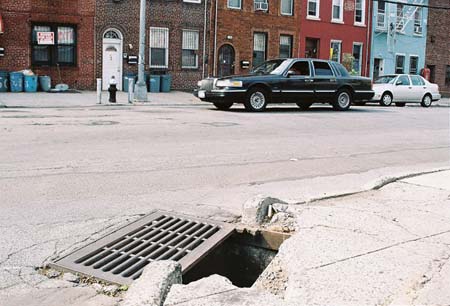
Whether it's unabated traffic on Van Brunt St., blind intersections or the hole pictured above, a stroll through the neighborhood offers more than spectacular harbor views.
Six weeks ago I called 311 to report a broken curb at Van Brunt and Delavan Streets. An obvious hazard, the hole measured approximately 4'x1' and dropped directly into the sewer.
The Department of Environmental Protection responded quickly, placing temporary barricades around the hole within hours of the complaint. Today the barricades are gone, but the hole remains.
It's hard to believe this hole still exists in Brooklyn's "Hottest" neighborhood.
When it comes to Red Hook, many local officials only see what they want to see. Meanwhile motorists and pedestrians are left feeling their way through rapidly changing surroundings.
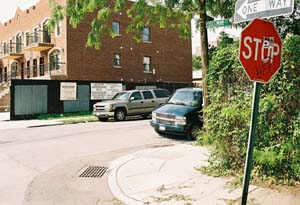
The intersection of Dikeman and Dwight Streets offers an illustrative example of Red Hook's many blind corners (see above). As with many intersections here, simply crossing this street requires a leap of faith.
The one-way traffic on Dwight does not have a stop sign as it heads south towards the future IKEA site. Presumably Dwight will handle much of the 6,000 cars expected to visit IKEA daily (11,000 on Saturdays).
Motorists on Dikeman do not have a sight line of the cross traffic until they enter the middle of the intersection. This promises trouble as the neighborhood attracts more and more visitors (see below).
(Note: the building pictured above is a new nine-unit luxury condo development with two- and three-bedroom units--available for $700,000 to $825,000. The project is being marketed as "Dwight Gardens" on some literature, "Dikeman Gardens" on others.)
The Department of Transportation has not responded to the recent protest on Van Brunt St. I recently called the DOT's customer service line (212-442-7000) and was transferred to the Community Affairs and Press office. The conversation went thusly:
B61: Hello, I'm a writer for the website B61 Productions and would like to speak with someone regarding the traffic situation in Red Hook. As you probably know...
DOT: Wait, who do you write for?
B61: [It's] an online magazine about Red Hook. And as I'm sure you know, the area is dealing with an increase in traffic due to recent development.
DOT: What do you want to know?
B61: I was hoping to get DOT reaction to the protest that recently took place after a woman was killed by a car on Van Brunt St.
DOT: When was the protest?
B61: Last Thursday.
DOT: Well, can I send you a statement?
B61: OK, but is it the statement that says DOT will study the issue this fall after traffic patterns emerge?
DOT: Well, yeah.
B61: Yeah, I've got that one. I was really hoping to talk to someone about whether the plan had changed in light of the recent death and outcry from the neighborhood.
DOT: Well, I'm going to have to get someone to call you back.
B61: That would be great, I would really appreciate it.
While I wait for that call, it gives me time to reflect on the rapid pace of IKEA's demolition compared to the state of Columbia Street's reconstruction project. Halfway through a two-year capital project, most of Columbia St. remains untouched. The rest is a dirt path. It's possible that Columbia St. will be ready when IKEA opens its 1,500 car parking lot. But what will Van Brunt look like by then?
Timeout New York's recent cover story "The War for Brooklyn" begs the question "Whose side are you on?" However, most of the issues facing us right now transcend "Sides," as all residents look to the City for a plan.
Unfortunately, City officials only show interest in Red Hook when they're holding oversized scissors on the sunny side of a chain link fence.
|
|
Lack of stoplights draws ire of residents |
|
|
|
(B61 Photo)
|
|
Originally posted July 22, 2006
|
|
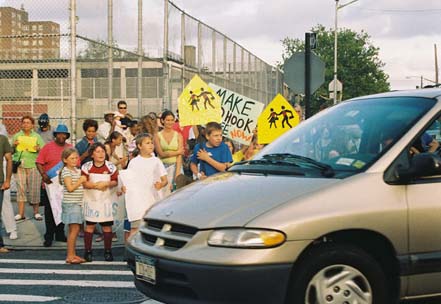
Red Hook residents, old and new alike, raised their collective voices last Thursday night to draw attention to the neighborhood's growing traffic problem. The crowd estimated at 150 exceeded police expectations by 120 according to the Community Affairs Officer at the scene.
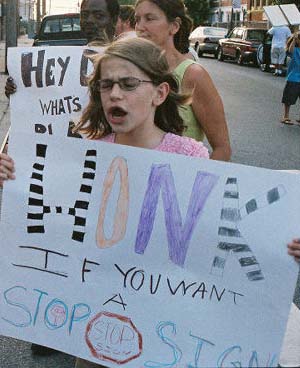
"We can get traffic lights for first-class passengers, but not for second-class citizens," said John McGettrick, co-chair of the Red Hook Civic Association. McGettrick was alluding to the traffic light recently installed at Bowne St. to control traffic from the cruise ship terminal. It is one of only two stoplights amid a stretch of 15 unprotected intersections on Van Brunt St.
The Civic Association has been lobbying the City Department of Transportation for traffic mediation ever since plans began to take shape for the terminal, the new Fairway grocery store and the prospective IKEA. The recent death of a pedestrian at the corner of Van Brunt and Wolcott Streets has brought the issue to a boil.
"Do you see a traffic light anywhere," asked Lillie Marshall head of the Red Hook Houses Tenants Association. "We will fight until (DOT) does something about this."
DOT has reported they will begin studying the issue this fall.
More to come.
|
|
Lines being drawn on EDC plan for piers |
|
|
|
(B61 Photo)
|
|
Originally posted June 23, 2006 |
|
The rapid change wrought upon Red Hook this spring has left many in the community wondering, "What now?" Representatives from the City's Economic Development Corporation presented a preliminary answer to this question at Monday night's Community Board 6 meeting at Long Island College Hospital.
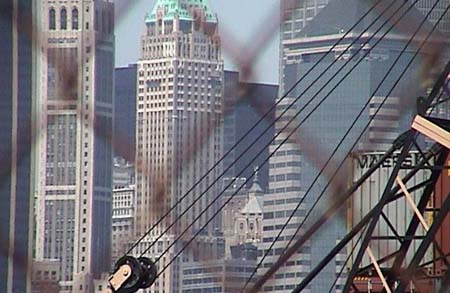
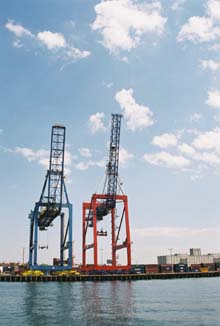
Specifically the EDC is developing a plan for piers seven through twelve--120 acres of waterfront property that runs from the Atlantic Basin to the edge of the future Brooklyn Bridge Park. The 1.1 mile stretch encompasses the cruise ship terminal at pier 12, twin warehouses at 160 and 162 Imlay St., a container port run by American Stevedoring Inc., and the Columbia St. Waterfront District.
Kate Collignon of the EDC began the meeting explaining that the presentation would be a distillation of suggestions and concerns gathered at a public workshop held in May. "We want to find out," Collignon said, "Did we hear you correctly?"
Residents, industrialists, labor representatives and developers were among those in attendance with a vested interest and a ready reply.
Matt Yates of ASI and Sandy Pope of Teamsters Local 805 expressed skepticism with EDC's blueprint for piers seven through 10--currently operated by ASI. Along the West side of Columbia St., EDC envisions a mirroring of the retail, residential and office space that has developed landside. Plans also call for a second cruise terminal on pier 10 with adjoining hotel and convention space. Industrial operations would utilize piers eight and nine. Phoenix Beverages, distributor of Snapple and Brooklyn Beer, would occupy pier seven.
"There have been much-debated plans over the years, exciting plans for the waterfront with the container port," Yates said. "Is it possible we're overlooking years of planning that solicited the views of the community?"
EDC's Andrew Genn said their goal was to provide a balance between industry, residents, tourism and job creation. ASI currently employs 600 longshoremen. Phoenix Beverage would provide 400-500 jobs. ASI's operation would remain, but be confined to pier 9a.
Yates expressed concern that, "We're trading one set of jobs for another."
Pope of Teamsters Local 805 was more blunt. "I've gotten nothing but lies from the EDC," she said referring to the city's handling of tenants on the site of the future Brooklyn Bridge Park. "There's been no effort to replace good blue-collar jobs, working-class, middle-class jobs. These jobs pay $30,000. They work very hard to live and work in Brooklyn."
Genn responded that the EDC is working to bring the lost industrial jobs into the fray on piers seven through nine.
Traffic was an obvious point of contention in light of Fairway's recent opening. An ill-timed stoplight at Bowne St. and continual road construction on Columbia St. ($17 million project scheduled for completion Fall 2007) have made matters worse for delivery trucks attempting to make their normal rounds. Many have resorted to straying from the designated truck route to reach their destinations. The plan calls for an extension of Conover St. to address this problem.
Some residents argued that the expanded truck route and industrial development proposals would inhibit residential and recreational development. Longtime resident Dave Lutz argued that the proposal offered "half the open space that was already promised," and that developing the parcel would block the view of Manhattan's skyline from Hamilton Ave.
However, truck access to the neighborhood is vital, countered Phaedra Thomas, CB6 member and executive director of the Southwest Brooklyn Industrial Development Corporation. "Introducing residents on top of a truck route is a big mistake."
Alan Mukamal, resident and member of the Gowanus Dredgers canoe club voiced support for more recreational use in the area. He contended that extending the truck route would increase traffic in the area and make the route treacherous for bicyclists. The Brooklyn Greenway bike path is a "given" according to EDC's plan.
"The issue of traffic is not a settled issue," interjected CB6 committee co-chair Al Nembhard. "It's not a new problem. It ain't goin' away. And I just want everyone to be very clear. There's not going to be any winners in this particular debate."
A veteran of the ongoing traffic debate, John McGettrick said the focus should be on "rebuilding our lost population." As co-chair of the Red Hook Civic Association, McGettrick has long-argued that an influx of new residents would spur the neighborhood's economy.
Since the development would be under the control of the City, Collignon noted, the EDC would have the discretion to make any residential developments affordable.
Buddy Scotto, President of the Carroll Gardens Association, said that he wouldn't recommend affordable housing developments in the area unless he knew cargo shipping would survive elsewhere in Brooklyn. He mentioned Sunset Park as a possible alternative for retaining the industry in the borough.
John Scala of Williamsburgh Paper Stock asked whether the city would employ eminent domain as they reshaped South Brooklyn's waterfront. Collignon assured Scala that the City would not use eminent domain and that his business, a fourth-generation family-owned paper recycling operation, would be a part of any future plans.
Shifting to the Atlantic Basin, the proposal focused on maritime uses of piers 11 and 12. Comparisons to Chelsea Piers were made in the presentation. Maritime-related educational and cultural uses were envisioned as well as marina support operations and a possible connection to Governor's Island.
Carolina Salguero, Director of PortSide NewYork has previously received CB6 support for a maritime career center and other cultural programs that would create a relationship between the landside community and the maritime sector. The organization is close to acquiring a 170-foot tanker. The vessel would be open to the public and house the organization's offices.
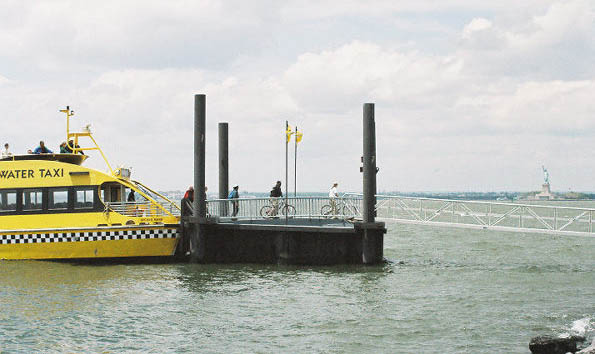
New York Water Taxi has made proposals for ship repair, refueling and waterway transportation. Currently the water taxi service only runs to the Fairway location on the weekends.
An inevitable increase in traffic, a continued need for job opportunities and an influx of new residents are just some of the debates that will take place as EDC reshapes South Brooklyn. But the fate of this 1.1 mile stretch will be the source of arguments for decades.
|
|
The Slackers to headline The Hook on Saturday |
|
|
|
(Photo taken from here.)
|
|
Originally posted June 16, 2006 |
|
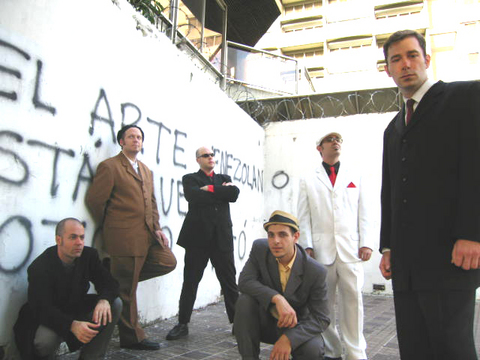
Their contemporaries may be Rancid, Mighty Mighty Bosstones and Sublime, but ska veterans The Slackers' are more kindred to 60s Jamaica--with a heavy Brooklyn accent. This Saturday the Hellcat recording artists headline The Hook's Slackfest, featuring opening bands Captain of Industry, Downbeat Alley and Les Sans Cullotes. For good measure, Slavic Soul Party will end the night with a set at 1 a.m. We're not familiar with their brand of instrumental Slavic punk, but we're certain it's timeless.
The bar will run a free shuttle bus from the Carroll St. F/G subway stop at the corner of Smith and Second St. Tickets are $12. Doors open at 7 p.m.
|
|
Things to do in Red Hook when you're wet |
|
|
|
Originally posted June 7, 2006
|
|
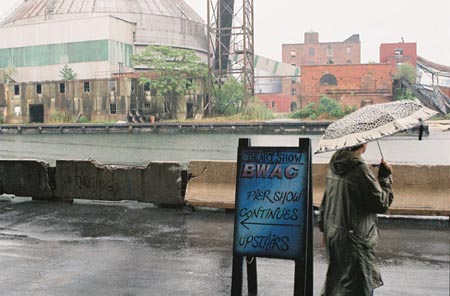
It's enough to make this thick-skinned community blush. When Timeout tells everyone you've arrived, ready or not, you've arrived. Unfortunately, so did a constant drizzle.
Inside the Beard St. Warehouses last weekend, the shows went on. Presented by Dance Theatre Etcetera, the Red Hook Waterfront Arts Festival showcases a vibrant mix of music, dance and video (created by local kids at Hook Productions and Brooklyn International High School). Held in conjunction with the BWAC Pier Show and the Open Studio tour, the annual event brings this still-developing arts scene into focus. This year however, weather blurred that image by reminding would-be visitors that Red Hook is still hard to get to.
Rain dissuaded the large crowds normally attracted to the event, but reservations were needed at 360 (360 Van Brunt St, 718-246-0360) and The Good Fork (391 Van Brunt, 718-643-6636). El Huipil (116A Sullivan St., 718-855-4548) and Hope and Anchor (347 Van Brunt, 718-237-0276) were also at or near capacity. On a related note, the diner will soon double its seating with a backroom expansion.
This upcoming weekend
Off The Hook's Spring Shows take place Friday, June 9 at 7:00 p.m. and Saturday, June 10 at 3:00 p.m. and 7:00 p.m. at PS 15 (71 Sullivan Street). Program includes plays written by local teens with help from professional playwrites. Admission is free. Call 718-596-5298 for reservations and information.
Carter Foster (curator of Drawings at the Whitney Museum of American Art) will hold a curator's talk at Kentler International Drawing Space (353 Van Brunt), featuring selections from the Kentler Flatfiles. The event will be held on Saturday, June 10, at 4 p.m.
CIRCUSundays continues on board the Waterfront Museum and Showboat Barge (290 Conover St., 718-624-4719). Shows run every Sunday in June at 1 and 4 p.m.
Also on Sunday at 3 p.m., Sunny's Reading Series will feature readings from the new crime fiction anthology Hardboiled Brooklyn. The reading will be emceed by the editor, Reed Farrel Coleman. The series is coordinated by Gabriel Cohen, the author of the aforementioned Timeout article. Sunny's is located at 253 Conover Street.
BWAC's Pier Show continues this weekend 1-7 p.m. Saturday's schedule includes creative art thereapy and an evening dance party. On Sunday at 3 p.m., Jenny Hill and Chill Factor will perform in the Unplugged in Red Hook series.
|
|
IKEA demolition reveals abandoned scenery |
|
|
|
(Photo by Sonja Shield)
|
|
Originally posted May 31, 2006
|
|
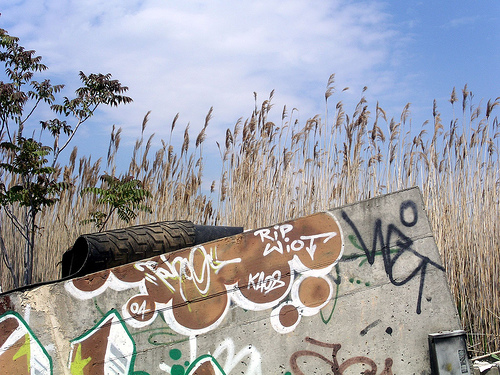
As Civil War-era facades fall at the Todd Shipyard on Beard St., photographers are getting a glimpse at the current landscape along the Erie Basin. Before the waterfront site appealed to IKEA, the concrete blocks were "museum walls for some of the best graffiti artists in the city," says Brooklyn photographer Sonja Shield. Shield's work at the site can be found here.
|
|
Residents size up new neighbor on Van Brunt |
|
|
|
Originally posted May 22, 2006
|
|
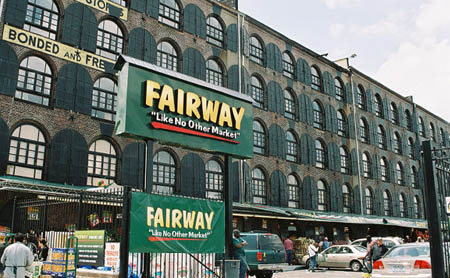
Shoppers began streaming to the new Fairway last Wednesday by car, bike and foot. While the numbers alone speak volumes--52,000 square-feet, over 500 kinds of prepared foods and 300 employees (including 150 Red Hook residents)--the impact the gourmet supermarket has already had on the neighborhood is not easily quantified.
"It's a good opportunity. Everybody's starting new and fresh," said 21-year-old cashier Renell Burrell during her break on Saturday afternoon. The Crown Heights resident took part in a three-week job training program to prepare for the store's opening. "There's 600 to 700 different codes for produce you have to learn off-hand. It can be overwhelming."
Fairway's first weekend left many in the neighborhood feeling like Burrell, both optimistic and overwhelmed.
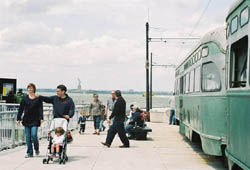
Inside the 150-year-old warehouse, walls of cheese and gallons of stuffed olives captivate shoppers. Outside, the Verrazano Bridge and Statue of Liberty frame a panoramic postcard view of the harbor. Old trolley cars sit sandwiched between the adjacent Waterfront Museum Barge and the Beard St. Warehouse (home to the Brooklyn Waterfront Artists Coalition). Even with landscaping still in progress, the rare stretch of public waterfront access is already a worthy tourist destination.
Among the locals scoping out the scene were Ella and Warren--Red Hook residents for the last 48 years.
The couple raised their three sons while drugs plagued the neighborhood around them. As witnesses to Red Hook's history, they've just about seen it all. "It was better years ago," said Warren, a conductor for the MTA since 1969. "In the sixties and early seventies there were more people, and more jobs."
As she saw familiar faces throughout the store, Ella said she recognized the store's potential. "It's giving the young people a job. And it will give the people who are coming out here a place to walk."
 But as loyal Pathmark customers, Ella and Warren weren't ready to abandon their grocery buying habits.
"Who can afford that?" Ella asked gesturing towards the meat cooler. "It's nice stuff. But people who live here can't afford it."
The store prides itself on offering prices below their competitors (namely Whole Foods). But for budget-conscious shoppers, Fairway's upper range of gourmet items can cause sticker-shock when compared to discount supermarkets.
Mixed in with the array of imported gourmet foods, Ella and Warren did find a few items that met their taste and budget. For steaks, however, they'll continue to shop at Pathmark.
In other corners of the neighborhood there is no such ambiguity.
"We went from having no options, to having everything imaginable," said Nadia Tarr, a clothing designer who moved to Red Hook a year and a half ago. Tarr was one of dozens that gathered Saturday night for a 26th birthday party on Dikeman St. The new store was an unavoidable topic of conversation as everything consumed--craft beers, barbecued meats, homemade guacamole, etc.--had entered the party in plastic Fairway bags.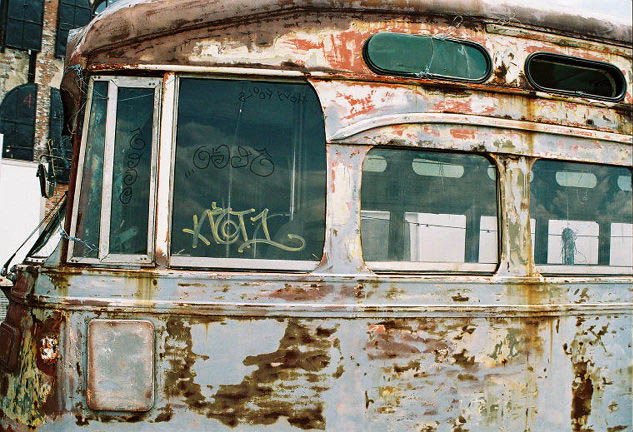
For this demographic, Fairway has always been a part of the neighborhood--in theory.
Since Timeout first raved about Hope and Anchor four years ago, Red Hook has been on New York's culinary map. While The New York Times food critics have recently heaped praise upon 360 and The Good Fork, their reviews of the neighborhood have been mixed.
The store's grand opening represents the first concrete sign that Red Hook's cultural and economic renaissance is for real. Now boutique shops like Lenell's and Baked are suddenly put in proper context. After six years of planning, debating and developing, it happened overnight.
|
|
Local kids to debut original plays at PS 15 |
|

|
|
From left to right: Dominique Daniels, Taj Green-Graham, Jodi Robinson, Malik Brown and Alberto Agront.
|
|
Five young playwrights will perform their works alongside professional actors when Falconworks Artists Group presents "Off the Hook: Original Plays by Red Hook Kids" on Friday, March 17, at 7:00 p.m. and Saturday, March 18, at 3:00 p.m. and 7:00 p.m. The performances are free and will take place in the auditorium of PS 15.
The 10- to 13-year-old playwrights have each written a play during an eight-week afterschool playwriting workshop conducted by Falconworks, a not-for-profit theater organization based in Red Hook.
With the support of adult mentors including several practicing playwrights, the kids followed a process focused on the elements of character, conflict, and resolution. The workshop was followed by three weeks of rehearsals with working actors, directors, and technical artists who volunteered their time.
According to Program Director Megan Cramer, "The kids write plays that on the surface might seem simple, but with the help of professional actors and directors they're able to discover and present to the audience all the complex emotions and conflicts underneath."
"Off the Hook" is a production of Falconworks Artists Group, in cooperation with Good Shepherd Services' Community Center Beacon at PS 15. Major financial support for "Off the Hook" has been provided by the Independence Community Foundation and the New York State Council on the Arts.
PS 15 is located at 71 Sullivan Street, between Van Brunt and Richards Streets, in Red Hook. The school can be reached via the B61 bus to Van Brunt at Wolcott or the B77 bus to Wolcott at Dwight. For information and reservations, call 718-254-0328 or visit www.falconworks.com. |
|
A year later, questions and a memorial remain |
|
|
|
UPDATE: The New York Daily News reports that the City of New York has admitted Markita Weaver was killed by a Sanitation Department snowplow one year ago today.
|
|
Originally posted Jan. 23, 2006
|
|
By Sara Stefanini |
|
|
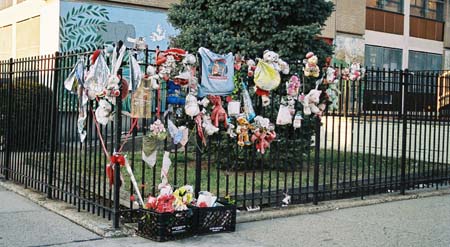
What started as a makeshift memorial on a corner near Public School 15 where Markita Nicole Weaver last dove into a snow bank to make angels still stands a year after the 10-year-old was dragged and crushed to death.
About 25 stuffed animals, mostly Teddy bears, are tied to the iron fence surrounding the elementary school, at the intersection of Wolcott and Richards streets. A Tigger doll, faded to a peachy orange, straddles one of the bars, while a white bear hangs in a clear plastic bag, gripping a red heart that proclaims "I love you." Deflated balloons dangle limply, and a crate of candles and plastic flowers sits on the sidewalk by the fence. Among the toys, a laminated note reads, "I just wanted to thank you for the things you did for my daughter, Markita. From her mother."
"That started spontaneously, we were surprised at how much people added," said Susan MacDonald, a counselor at PS 15, where Markita was a fourth grader. "It's going to stay there."
Markita died suddenly on a snowy afternoon on Jan. 23, 2005. She had been playing in the snow along the sidewalk when, according to witnesses, a snowplow turned the corner onto Wolcott Street, knocking her down and killing her as it passed.
Almost a year later, talk of the hit-and-run persisted around the neighborhood, as did the frustration with police for failing to close such an apparently clear-cut case, and with the New York City Department of Sanitation for refusing to take responsibility. Though police said they never found enough evidence to charge anyone in the accident, Markita's family decided soon after her death to hold the Sanitation Department accountable. Her mother, Maria Jimenez, filed a suit against the city in September, demanding a total of $85 million for wrongful death, according to court documents.
"We just all wish they had stepped up," Marie Lawson, a close family friend, said of the Sanitation Department. "I feel [the driver] knew he hit something -- maybe he didn't know it was a little girl -- but he should have stopped. I don't think he did it on purpose, but he should have stopped."
Lawson, 68, a caseworker at the Red Hook Senior Citizen Center, started crying at the mention of Markita, who used to call her "Grandma," though they were not related. Lawson described Markita, the third of six children, who lived with her mother in the Red Hook West Houses, as tall and skinny, with fine features and a large smile.
"She was a beautiful girl, and I'm not saying that because I loved her," she said. "My baby was pretty, and when I say pretty, I mean pretty."
On that Sunday afternoon in January, after a blizzard that dropped almost 14 inches of snow had finally ceased, Markita, her younger sister, Rakema, now 10, and five other friends rushed outside to play. They first stopped by the A&K grocery store opposite the school and asked for plastic bags, which they tied to their feet to slide down the snow bank.
Markita, dressed in white, ran ahead of her friends and lay down in the snow, waving her arms and legs to make an angel, while the others stood across the street throwing snowballs at one another, said Albert Andujar, 10, one of the children in the group. A few minutes later, Andujar and his friends decided to go back to the grocery store to get hot chocolate, and called out to Markita to join them.
"She said her foot was stuck in the snow, and we thought that she was just joking, so we kept saying 'Come on, stop playing,'" Andujar said. A snowplow then drove around the corner, hitting Markita and driving on without stopping. "The snowplow thought she was a piece of snow," Andujar said.
One child ran into the A&K shop, screaming that Markita was hurt, said Norman Algahim, the store's manager, who called 911. Markita lay face up, bleeding and unconscious, when the ambulance arrived at 2:45 p.m., according to Officer Paul Grudzinski, the community affairs officer at the 76th police precinct. She died an hour later at Long Island College Hospital.
Following a number of witness accounts, which all agreed that a snowplow had passed moments before the children found Markita's injured body, police investigated the local Sanitation Department depot in Gowanus, and examined four trucks that had been out plowing at the time of the accident, Grudzinski said. They never found enough evidence, however, to identify the vehicle that hit her or its driver.
The case is still open, and if a driver is found, charges could include leaving the scene of an accident and vehicular manslaughter, Grudzinski said.
Beth J. Schlossman, an attorney for Jimenez, announced the family's intent to file a suit a few weeks after Markita's death. On Sept. 8, Jimenez filed a suit against the city and the Sanitation Department, claiming that a snowplow hit the girl and that the department knew who the driver was, based on records of their assigned routes.
Schlossman said the case is in the beginning stages and could take years to resolve.
The fact that no criminal charges have been filed does not complicate the claim, Schlossman said. "We never really perceived this to be a criminal matter. It was an accident, I don't believe [the driver] even realized [what happened]. But he should have at least tried to talk to the family once he realized it."
Numerous attempts to contact Markita's family were unsuccessful. Calls to a telephone number listed for Jesse Jimenez, Markita's older half-brother, were not answered. Maria Jimenez went to North Carolina to get away while she grieved for her daughter, said Lawson, the family friend. Markita's father, Ronald Weaver, could not be located.
Among its demands, the family's suit requests that the city pay $25 million for causing Markita "to suffer grievous conscious pain and agony and mental anguish from the time of the occurrence until the time of her death," according to court documents. The suit also asks for $20 million for the "mental and psychological injuries, emotional trauma, sleeplessness, anxiety and fear" caused to Rakema after witnessing her sister's death, $10 million for the anguish caused to her mother, and another $20 million in restitution for the department's negligence. Jimenez, a school bus matron, has not been able to return to work since the accident, Schlossman said.
In a response filed in court by attorney Michael A. Cardozo, the city denied knowing whether a Sanitation Department vehicle was in or near the area where Markita was hit, and refuted the allegations that the department knows the driver's identity, court records showed. The document also stated that Markita was, at least in part, responsible for her injuries.
Keith Mellis, a spokesman for the Sanitation Department, declined to comment and deferred questions to the New York City Law Department. Kate O'Brien Ahlers, a spokeswoman for the Law Department, would not comment on the case because it is still pending.
Even if the department knew which drivers had been in the area at the time, as long as no charges were filed it was not obligated to release the information, Grudzinski said. He added, "I don't think the Department of Sanitation keeps as strict a record of drivers as the police department."
The story of Markita's death -- of a sweet, well-known girl who couldn't wait for the snow to stop falling so she could play in it -- sparked sadness and anger in Red Hook, a small neighborhood, where most residents know one another and where rumors travel fast. The story also resonated in the Brooklyn District Attorney's office, which decided to release Markita's father early from prison so he could attend her funeral.
Weaver, 40, was incarcerated on Nov. 5, 2004, two months before Markita was killed. He was sentenced to six years in jail for possessing and selling drugs, said Sandy Silverstein, a spokesman for DA's office. Though Silverstein confirmed that the DA decided to free Weaver early, he would not comment as to why. Schlossman would only say that the decision was "unusual."
Weaver, who had previous convictions for drug possession, criminal mischief and petty larceny and had served three years in jail in the late 1990s, was let out on parole three days before the church service and ordered to enter a drug rehabilitation program in February. Newspaper articles described him sitting in the front pew with Jimenez and their children at the funeral.
A few months after her daughter's death, Jimenez left Red Hook to visit family members in North Carolina and to escape the continued attention, Lawson said, adding that she did not know if she would return.
Covering her teary eyes with dark sunglasses, Lawson said she still worried about the accident's effect on Rakema, whom she described as quiet and introverted. "You couldn't tell, because she's not very emotional, she didn't say much, so I worry it'll come out later on. They were so close, the two of them, when you saw one you saw the other."
The memorial on the corner where Markita died began forming the day after the accident. Newspaper reports described friends, neighbors and classmates lining up to scrawl notes on a large piece of cardboard, tying toys and balloons to the iron fence posts and dropping plastic flowers into the crates.
Algahim, the grocery store manager, left a bag of KitKat and Snickers chocolate bars and lollipops. "She was in here all the time to get candy," he said. "She had a sweet tooth."
Andujar tied a balloon to the fence, he said while sitting in the snowy playground across the street from the memorial last month, a day after the season's first snowfall.
A week after Markita's death, mourners filed into the Blessed Virgin Mary Roman Catholic Church, two blocks down from the memorial, for the girl's funeral. Inside there was standing room only, Lawson said, adding that some people were forced to wait in the cold outside.
For Markita's 11th birthday, on April 26, Andujar and a group of neighborhood children, all clad in white T-shirts, held a party for their friend on the corner of Wolcott and Richards streets, singing songs and lighting candles. "We miss her," he said. "She was a real smart girl."
|
|
FAC development stokes affordable housing discussion |
|
|
|
Photo from danconnortown
|
|
Originally posted Jan. 5, 2006
|
|
By Dani McClain |
|
|
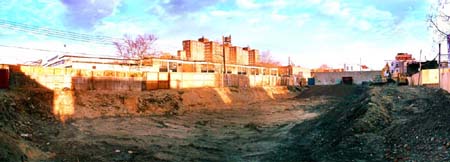
The bulldozed lots on Wolcott Street may just look like a barren stretch of land. But for some of Red Hook's public housing residents, hidden in those debris-strewn mounds of mud is a shot at homeownership.
In September Fifth Avenue Committee, a non-profit housing developer based in Park Slope, Brooklyn, broke ground at the future site of Red Hook Homes. This new mixed-income cooperative project will have 60 units, a third of which will be subsidized for families whose income is between $22,000 and $42,000. A citywide lottery will determine who will fill those 20 slots.
"The chances are slim," said Pete Morales, who has lived in Red Hook's public housing for over 50 years. "But those who are selected will be blessed with the American dream."
The Red Hook Homes project seems like an innovative solution to the city's housing crisis. But to some residents, especially those in public housing, Fifth Avenue Committee's efforts are too little too late. Longtime residents will have to compete with the rest of the city's low-income population for 20 units, while the other 40 will go to those with higher-incomes who have decided that this Brooklyn neighborhood is the new frontier.
According to James Brodick, director of the Red Hook Community Justice Center, 46 percent of Red Hook's residents are below the poverty level, and unemployment is 19 percent among people 16 or older. A Community Justice Center in-house report placed the median household income for a family living in Red Hook's public housing at $16,171.
Emma Broughton sees the gap between public housing residents' median income and the Red Hook Homes low-income requirement as proof that this development will have little impact on the community. Broughton, 75, has lobbied companies like Fairway and Ikea to come to the neighborhood. She moved to Red Hook when it was still a bustling industrial community with a working waterfront, and has lived in public housing there since 1958. Broughton said that Fairway, Ikea, and Carnival cruise ships, which is scheduled to begin docking in Red Hook this summer, will bring jobs. Until then, she said, unemployment and poverty will persist as a barrier to home ownership.
Dorothy Shields agrees. She is president of the Red Hook East Houses tenants association and was also a part of the Fifth Avenue Committee's Red Hook Advisory Council, the group of community residents who collaborated with the non-profit in the four years leading up to last month's groundbreaking. Despite her involvement in the process, she has doubts.
"I don't think nobody will move there, from East or West," said Shields, referring to both sides of the public housing projects that are home to 75 percent of the 4,019 units in the neighborhood. "I don't think our people could afford it."
Lou Sones, another member of the Red Hook Advisory Council and a homeowner in the neighborhood, said detractors like Broughton and Shields are missing the point.
"That is the most affordable housing in the country, if not the world," said Sones. "Is this housing for people on welfare? No. But anyone who says $25,000 for a family of four isn't affordable housing is out of their freaking mind."
The Fifth Avenue Committee's $17 million project, the result of partnerships with various banks and government agencies, will increase the number of owner-occupied homes in Red Hook by 20 percent. But this type of community investment had just started in the past ten years, since people with more resources, especially artists priced out of Manhattan, discovered the neighborhood. Until 1997, when Independence Community Bank opened a Red Hook branch, the closest bank was two train rides away.
"Red Hook has just been such an abandoned, disinvested community for so long," said Kat Aaron, an employee of Neighborhood Economic Development Assistance Program who has taught financial literacy classes in the neighborhood. "I think part of the resentment coming from the people in the projects is because Fifth Avenue Committee wasn't trying to do this ten years ago. So why now?"
Judy Dailey, a teacher and resident of public housing who has also served on the Advisory Council, said this is precisely the reason why many of her neighbors are cynical about the project. But, she said, any investment is good investment. Dailey isn't concerned that newcomers to Red Hook will destroy the character of the neighborhood. She rejects the idea that gentrification is wholly a bad thing.
"There's a lot of people who have moved into Red Hook and didn't just move their body, they moved their heart and soul," said Dailey. But she admits that the Fifth Avenue Committee's project is just one step in what will be a long process of providing affordable housing to the many Red Hook residents living in poverty.
"We're still looking for senior housing," said Dailey. "We're still looking for teen mother housing."
|
|
| | |